
Reviews
Nebula Orbiter succeeds by keeping its mechanics tight and its rounds short. The trade-off between mass and speed creates constant tension, and the projectile combat requires genuine aim and prediction. The archetype selection gives each match a slightly different feel without overwhelming players with complexity. The visual presentation is understated but effective, with particle effects that make every encounter feel impactful. For anyone looking for a quick, strategic online experience, this game delivers.
Description
Arena Dynamics and Growth
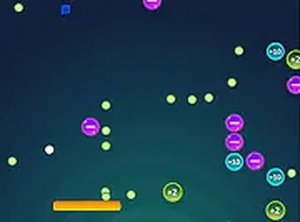
Nebula Orbiter places each player in a shared cosmic field filled with drifting energy particles. Collecting these particles increases your sphere's diameter, which in turn slows your movement. This trade-off between size and agility forms the core tension of every match. Larger spheres can absorb smaller ones upon contact, releasing a burst of particles that scatter across the arena. These bursts attract multiple players, creating brief zones of high activity. The arena itself is a closed loop, meaning there is no safe corner to hide indefinitely. Players must constantly reposition to avoid being cornered by faster, smaller spheres or overwhelmed by larger ones.
Combat and Projectile Mechanics
Each sphere can fire a concentrated energy bolt that damages other spheres on impact. When a sphere's health reaches zero, it disintegrates into a cluster of particles that can be collected by anyone nearby. The projectile has a limited range and travels in a straight line, so leading a moving target is essential. Firing also consumes a small amount of mass, so spamming shots without landing hits will shrink your sphere over time. Health is indicated by the brightness of the glow surrounding your sphere; a dim glow means you are vulnerable. Health regenerates slowly when you are not being hit, encouraging brief retreats to recover.
Boost Function and Risk Management
A temporary speed boost is available by pressing a dedicated key. Activating the boost consumes a portion of your sphere's mass, making you smaller but much faster. This is useful for escaping a larger pursuer or closing the distance to a fleeing target. However, using the boost recklessly can leave you too small to compete. Skilled players learn to toggle the boost in short bursts rather than holding it continuously. The mass lost during boosting scatters as small particles that can be collected by other players, adding another layer of risk to every sprint.
Archetype Selection and Strategic Variety
Before each match, players can choose from several archetypes, each altering starting attributes. Some archetypes begin with higher mass but slower speed, while others start small and fast. One archetype may have a faster health regeneration rate, and another might fire projectiles that travel farther. These choices allow players to tailor their approach to their preferred style. The archetype system adds replayability, as trying different setups reveals new strategies. No single archetype dominates, as success depends more on moment-to-moment decisions than on initial stats.
Visual Presentation and Atmosphere
The space theme is realized through a dark backdrop dotted with distant stars and nebula-like color gradients. Spheres emit a soft glow that intensifies as they grow larger. When a sphere is destroyed, the resulting particle burst creates a brief flash of light that is visually satisfying. The user interface is minimal, showing only your current mass, health glow, and a small map of the arena. This clean design keeps the focus on the action. The color palette uses cool blues, purples, and whites, giving the game a calm yet energetic feel.
Session Length and Accessibility
Matches in Nebula Orbiter typically last between two and five minutes. This short duration makes the game suitable for quick breaks or extended play sessions. There is no persistent progression system; each match starts fresh, with all players beginning at the same size. This ensures that newcomers are not at a permanent disadvantage against experienced players. The simple controls—move, fire, boost—can be learned in seconds, but mastering the timing and positioning takes practice. The game rewards spatial awareness and quick decision-making over mechanical speed.






03 Comments
Sign in to comment
You must be logged in before posting a review or rating.
No account? Create one
No comments yet. Be the first to comment!