
Reviews
Draw and Solve: Creative Puzzles stands out by making the player an active creator rather than a passive solver. The physics-based drawing system is intuitive, and the cheerful art style keeps the mood light. Puzzles start simple but gradually introduce more complex cause-and-effect relationships. The lack of time pressure allows for thoughtful experimentation. It is a rare game that genuinely encourages creativity while still providing a satisfying logical challenge. A solid choice for anyone looking for a calm, engaging puzzle experience.
Description
Drawing as a Problem-Solving Tool
Draw and Solve: Creative Puzzles puts a pencil in the player's hand and asks them to think visually. Instead of selecting from pre-made options, you create your own solutions by sketching lines, circles, or more complex shapes. These drawings become part of the game world, interacting with characters and objects in real time. The challenge lies in imagining how a simple sketch can change the outcome of a scene. This approach makes each puzzle feel personal and encourages experimentation. Players quickly learn that a small adjustment to a drawing can mean the difference between success and starting over.
Scene Design and Visual Style
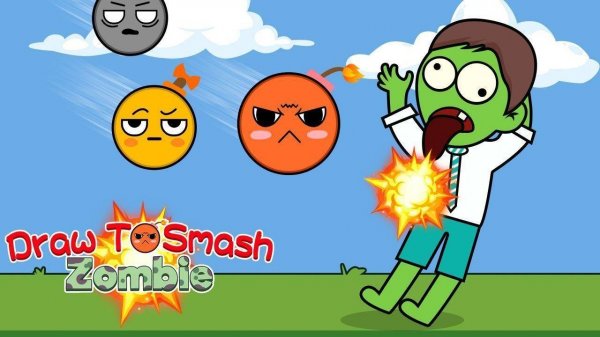
Each level is built around a cartoon setting filled with friendly characters and simple obstacles. The art style uses bright colors and clear outlines, making it easy to see where your drawing might fit. Scenes might include rolling hills, moving platforms, or gentle waterways. The characters themselves have expressive faces that react to the player's actions, adding a layer of charm. This visual clarity helps players focus on the logic of the puzzle without being distracted by complicated graphics. The overall look is cheerful and inviting, suitable for younger players as well as adults.
Physics and Cause-and-Effect Logic
The game uses a physics system that makes drawn objects behave in believable ways. A drawn ramp will let a character slide down, while a drawn barrier can stop a moving object. Weight, angle, and shape all matter. This means players must think about how their sketch will interact with the environment before they draw it. It is not just about drawing something that looks right; it must also work within the game's rules. This layer of realistic interaction adds depth to what might seem like a simple activity. Players learn to predict outcomes and adjust their strategies based on previous attempts.
Gradual Difficulty and Learning Curve
Early levels introduce basic concepts like drawing a bridge or a simple path. Later puzzles require combining multiple drawings or using objects in sequence. The difficulty increases slowly, giving players time to understand the mechanics. There is no time pressure, so each puzzle can be approached at a comfortable pace. This structure makes the game accessible to newcomers while still offering satisfying challenges for more experienced players. The sense of progression comes from mastering new types of puzzles rather than from speed or reflexes.
Encouraging Creative Thinking
Because there is often more than one way to solve a puzzle, the game rewards creative approaches. A player might draw a lever to flip a switch, or instead draw a weight to press a button. This flexibility means that two people might solve the same level in completely different ways. The game does not punish unusual solutions as long as they work within the physics. This openness encourages players to try ideas they might not have considered at first. Over time, this builds confidence in one's own problem-solving abilities.







03 Comments
Sign in to comment
You must be logged in before posting a review or rating.
No account? Create one
No comments yet. Be the first to comment!